
In the centre of Poznań, the early 20th century Wiedeńska Town House has been given a new design-lease on life by Polish studio Biuro Kreacja.
Spanning over 1,500 m² across two connected buildings, the spaces have been transformed into food hall Kulinarna Kamienica. Guests are lead through different eras and aesthetics: Art Nouveau details and stained glass, industrial references to Poznań’s history, minimalist design inspired by Asia, and the saturated colours of the East. Design studio Biuro Kreacja and M19 Architekci have brought these historic interiors back to life, combining refined design with a contemporary approach to gastronomy. This is how Kulinarna Kamienica came into being – a new, vibrant destination in this part of Poznań.
The Wiedeńska Town House in Poznań was built at the beginning of the 20th century as an elegant, representative Art Nouveau tenement – a place that attracted attention with its intricate Art Nouveau details, hand-painted stained-glass windows, and rich ornamentation. Located along an important urban thoroughfare, for decades it witnessed the lively rhythm of Poznań’s city centre, serving both residential and commercial functions. Over time, as a result of neglect and post-war reconstruction during the communist era, the building lost its former splendour. The interiors deteriorated, and the entire tenement remained for years in a state close to ruin.

“The building had been rebuilt so many times that inside there was practically nothing left inside of the original historic tenement. Just individual tiles, objects, traces of history,” says Dorota Terlecka of Biuro Kreacja. “I felt that this building deserved a second life.”
The Orient Express stops at Podgórna
The task given to Biuro Kreacja and M19 Architekci was to find a balance between the weight of the history of the tenement and the need to give it a new, lively urban function. Thus Kulinarna Kamienica was born – an open, contemporary space inspired by the food hall/restaurant market format, combining diverse flavours, original culinary concepts, and accessible menus. A place offering ten different cuisines and three bars, each with its own distinct style.
“When designing the interiors of a historic tenement, we wanted to build on local identity and the city’s history, but at the same time we had to tackle the diversity of flavours and the planned function of the space,” Terlecka explains. “We explored themes and narratives that could support us, and one of them was Art Nouveau – a reference to Art Nouveau railway stations. Naturally, the idea of a journey of flavours also emerged.”
The metaphor of a journey on the Orient Express allowed the designers to guide guests through different eras, cultures, and aesthetics within a single tenement. From the elegant Art Nouveau and stained glass of the Wiedeńska Town House, through industrial accents referencing the legacy of Hipolit Cegielski, to minimalist inspirations from Asia and the intense colours of the East – each fragment of the interior became a separate “stop” on this culinary and visual journey.
From a station waiting room to the Far East
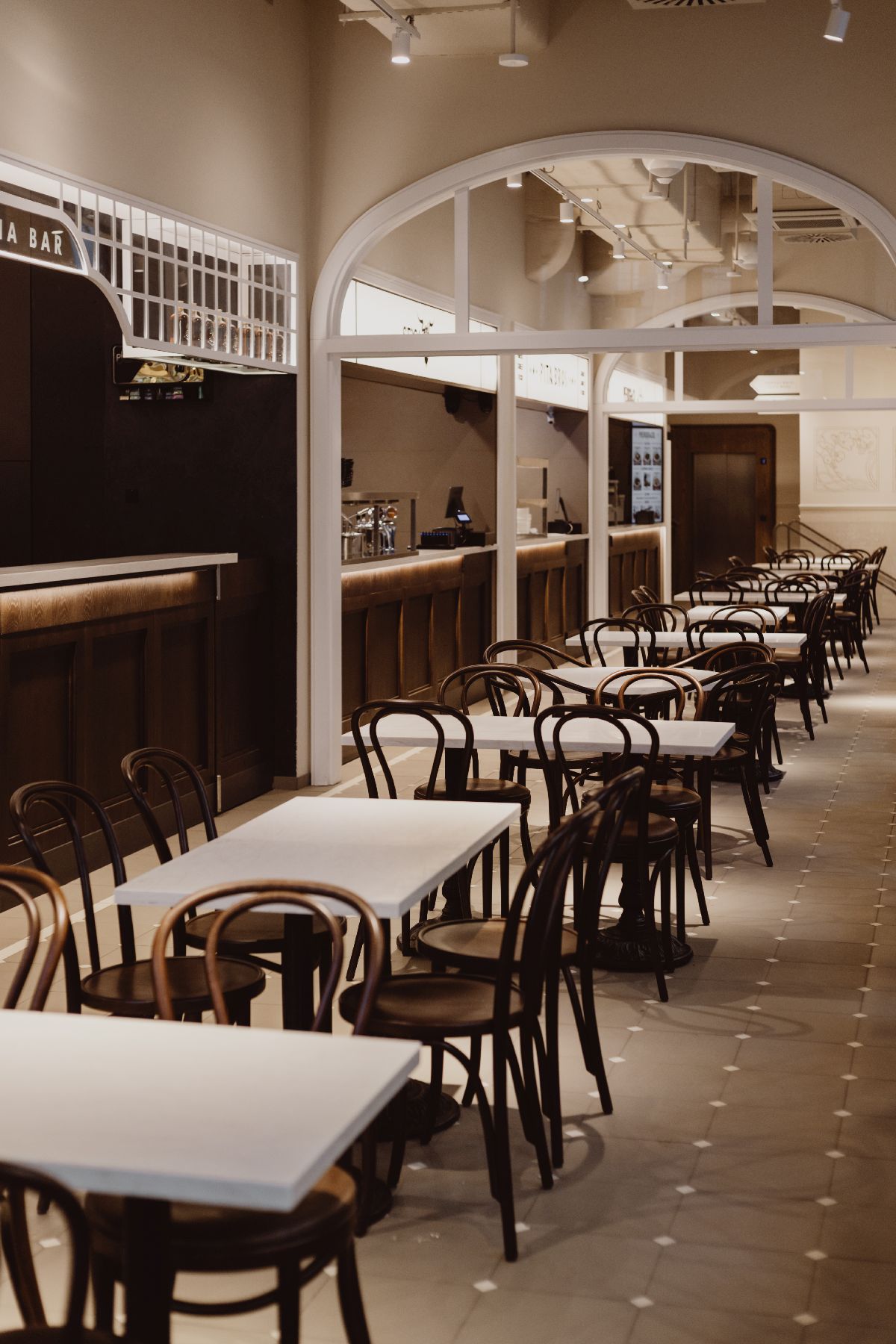
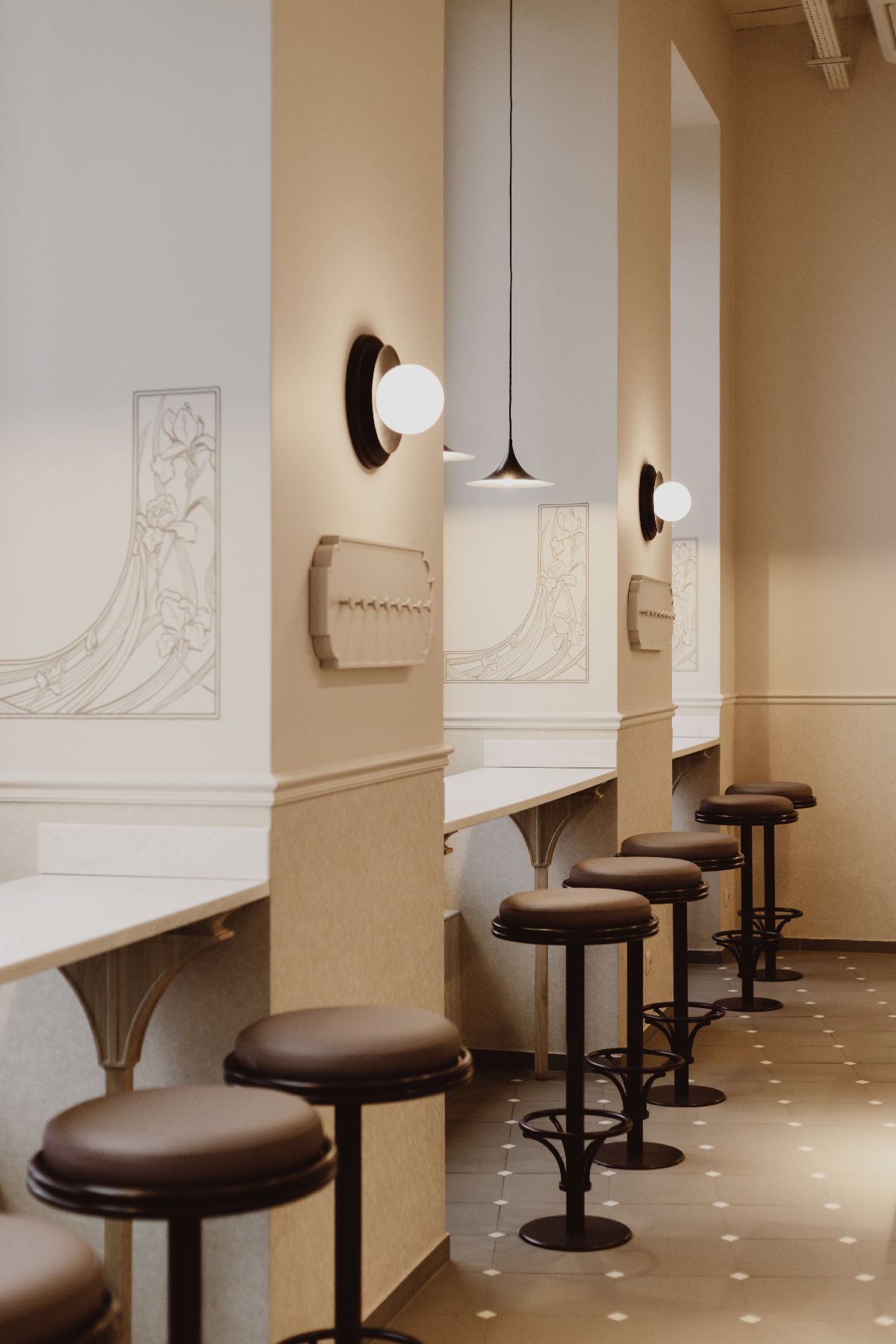
Upon entering Kulinarna Kamienica, visitors immediately find themselves in a space that naturally refers to the Art Nouveau origins of the building.
“Originally, there were service premises here. It was a commercial tenement in the style of Viennese buildings. After the war, this was never rebuilt. Only this revitalisation made it possible to restore the original functions. The Art Nouveau references that welcome guests at the entrance are a tribute to those former interiors,” says Terlecka.
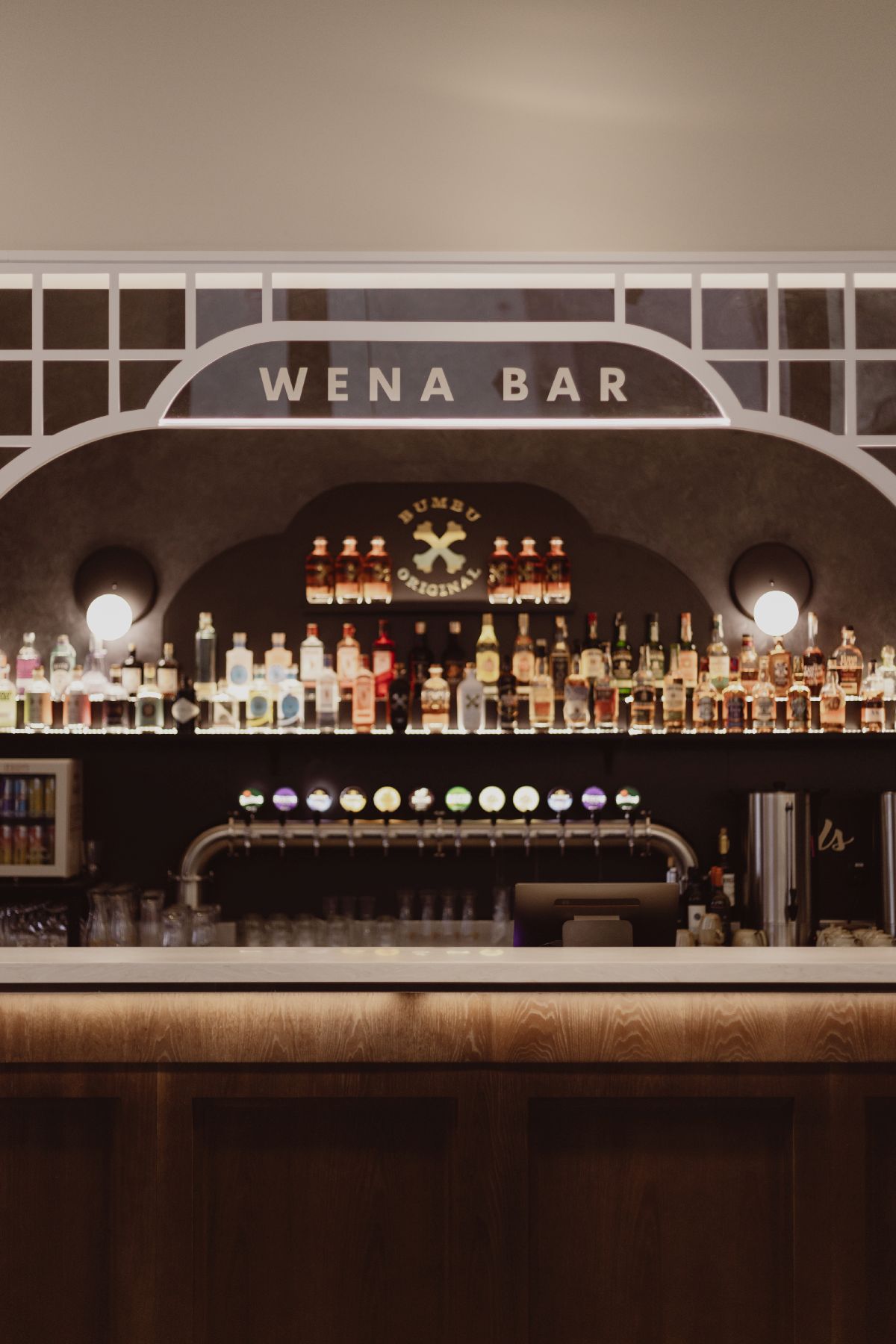
The high vault, the rhythm of shopfronts, and Art Nouveau details evoke the elegance of historic railway galleries – places of meeting and waiting along the way. Floors, arches, and hand-painted ornaments create the atmosphere of the early 20th century, while a centrally located bar with a curved form, finished in walnut veneer, organises the space and gives it a representative character. Upholstered seating and subtle references to railway carriage interiors introduce the motif of travel, which becomes the axis of the entire project and a natural starting point for the further narrative.
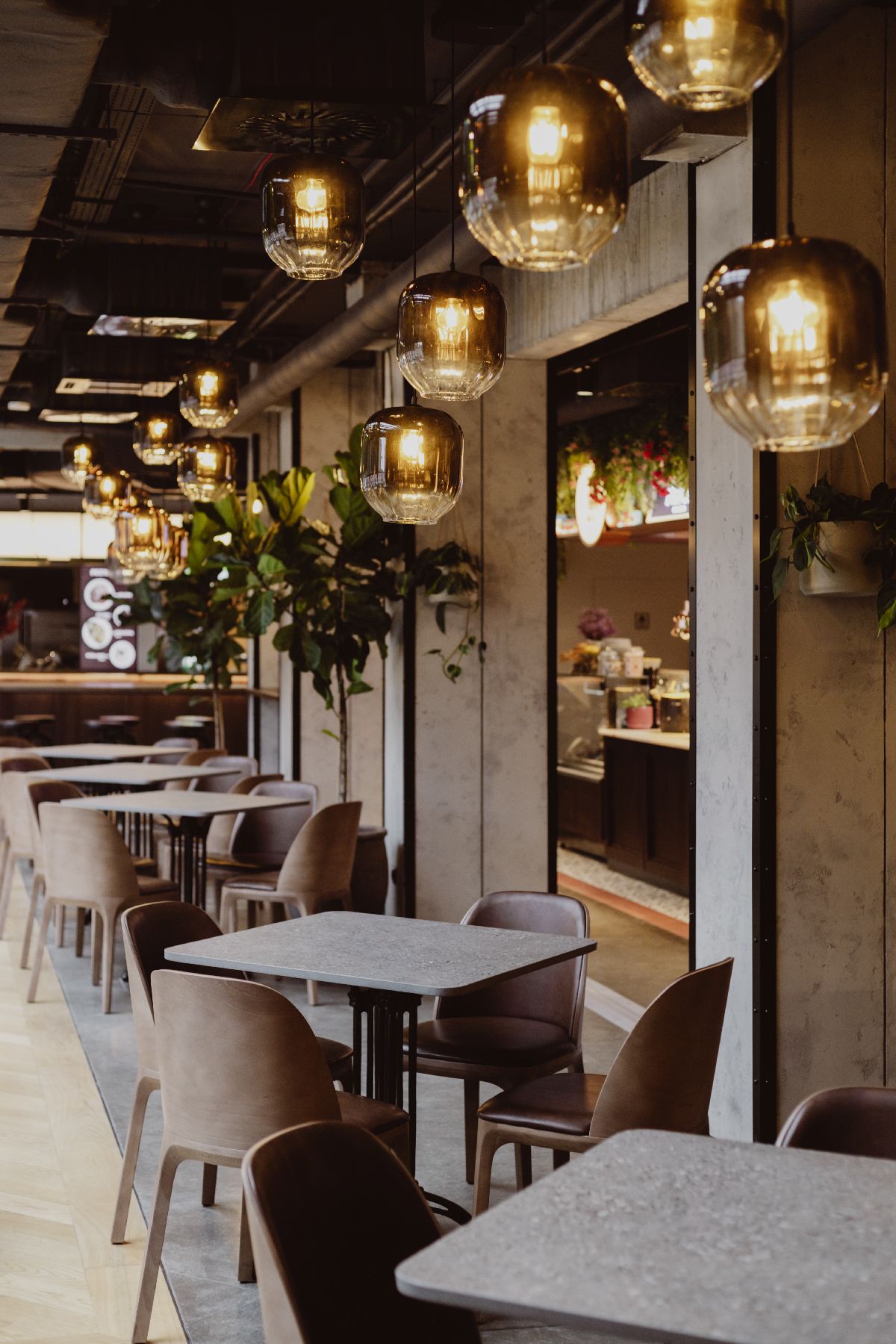
From the courtyard side, the architecture clearly changes its character, moving from Art Nouveau elegance towards the industrial traces of old Poznań. This part of the space refers to the history of the H. Cegielski factory in Poznań, which at the beginning of the 20th century was the country’s largest centre of steam locomotive production – all the more significant given that Cegielski’s own villa was once located in the courtyard adjacent to the investment. Steel fittings, industrial lamps, and furniture establish a technical rhythm, while murals depicting historic steam machines become a visual commentary on the city’s industrial heritage. The heart of this area is a covered terrace, which, interestingly, was not even part of the original design.
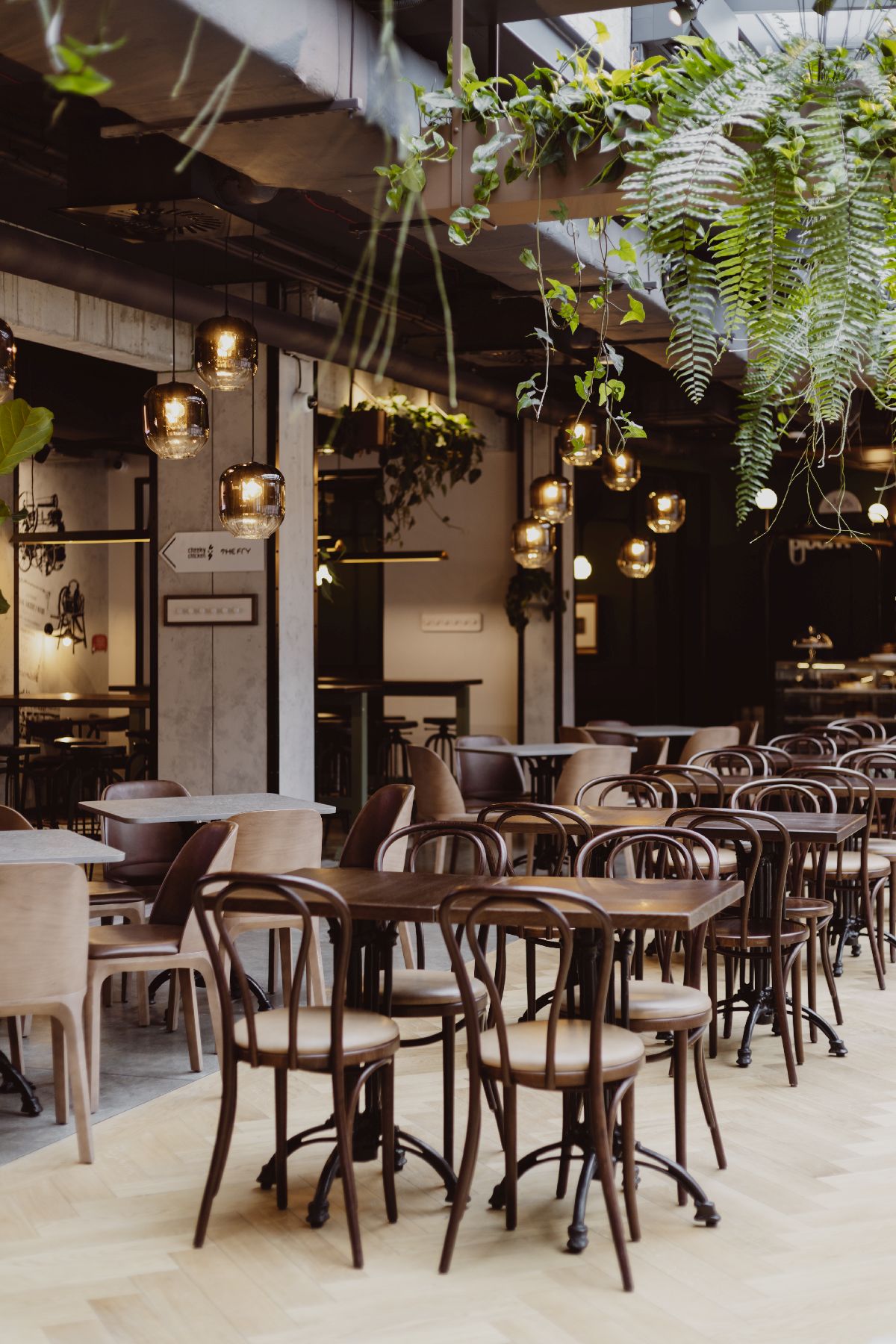
“Initially, there was supposed to be an outdoor terrace, but during the process the local development plan changed and we were given the opportunity to create a covered terrace. The most interesting thing is that this place is slightly removed from the entrance and initially wasn’t particularly attractive to restaurateurs. And suddenly it turned out that this terrace is the heart of the interior, and everyone wants to sit there,” Terlecka explains.
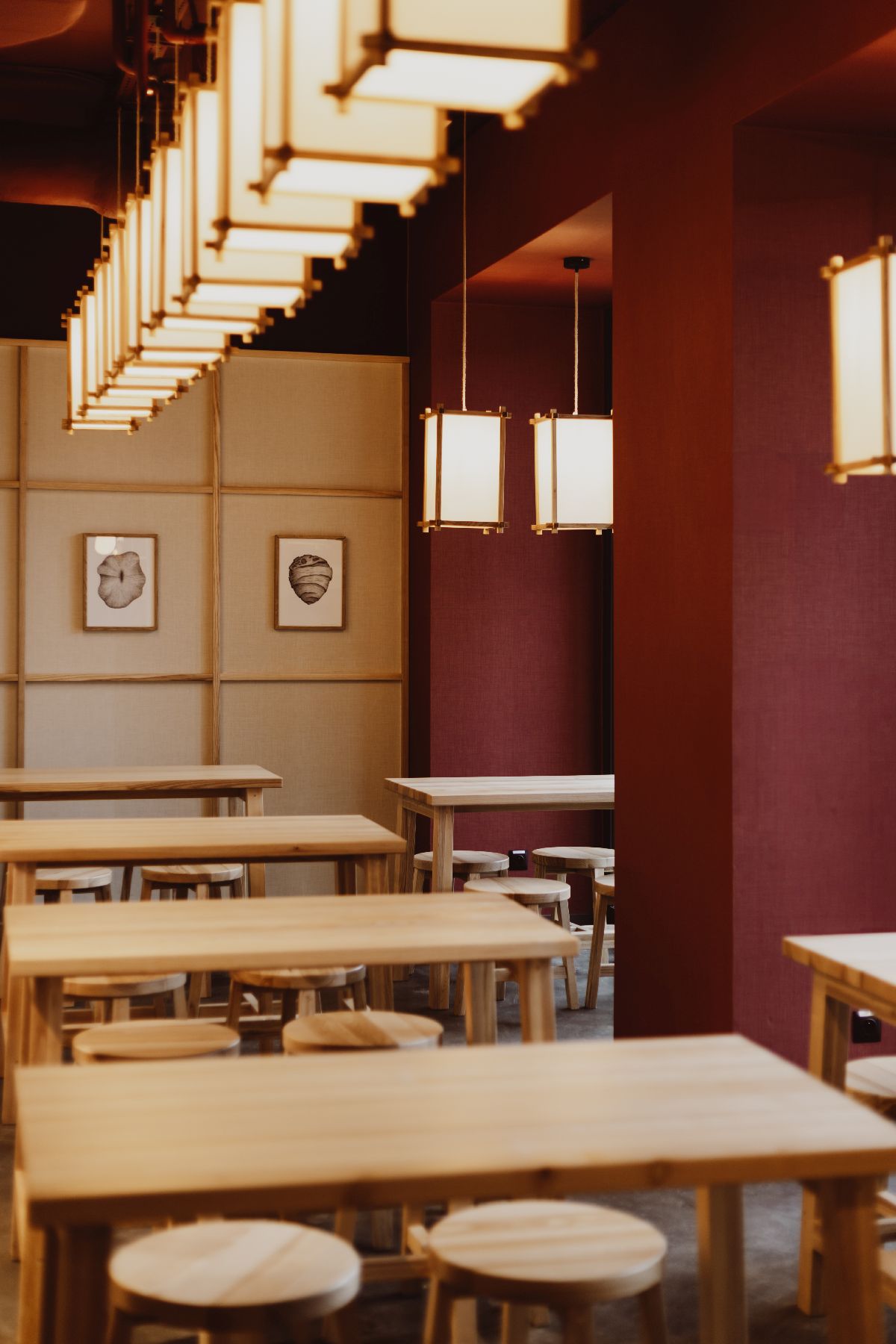
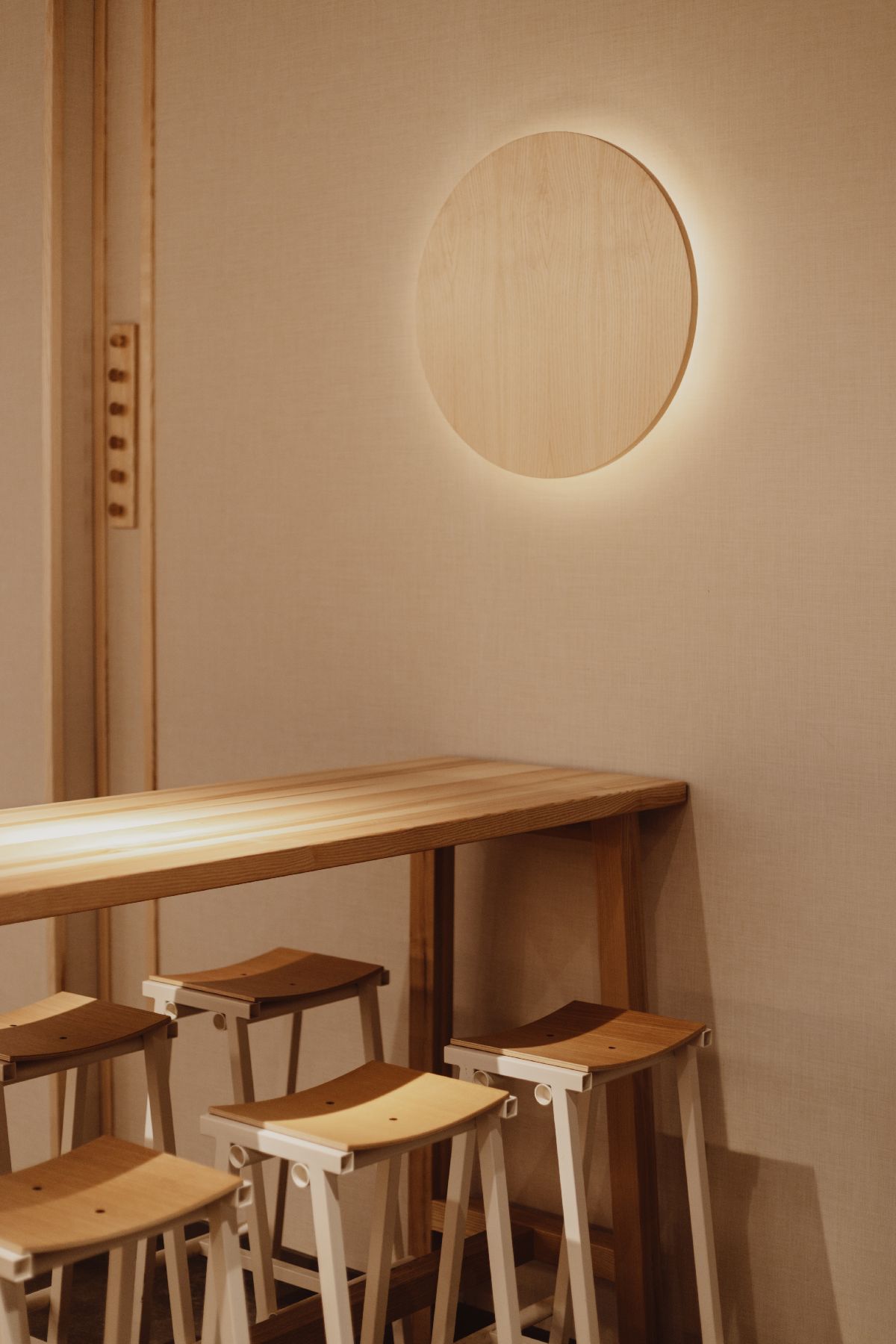
Moving further, the interiors of Kulinarna Kamienica gradually become calmer and more restrained. The Asia-inspired zone introduces a japandi aesthetic – light, orderly, and economical in form. Minimalist tables referencing Japanese simplicity, natural materials such as light wood, and wall-covering textiles organise the space and offer a sense of relief. The whole is complemented by simple, soft light from paper lanterns, creating an atmosphere of calm and focus.
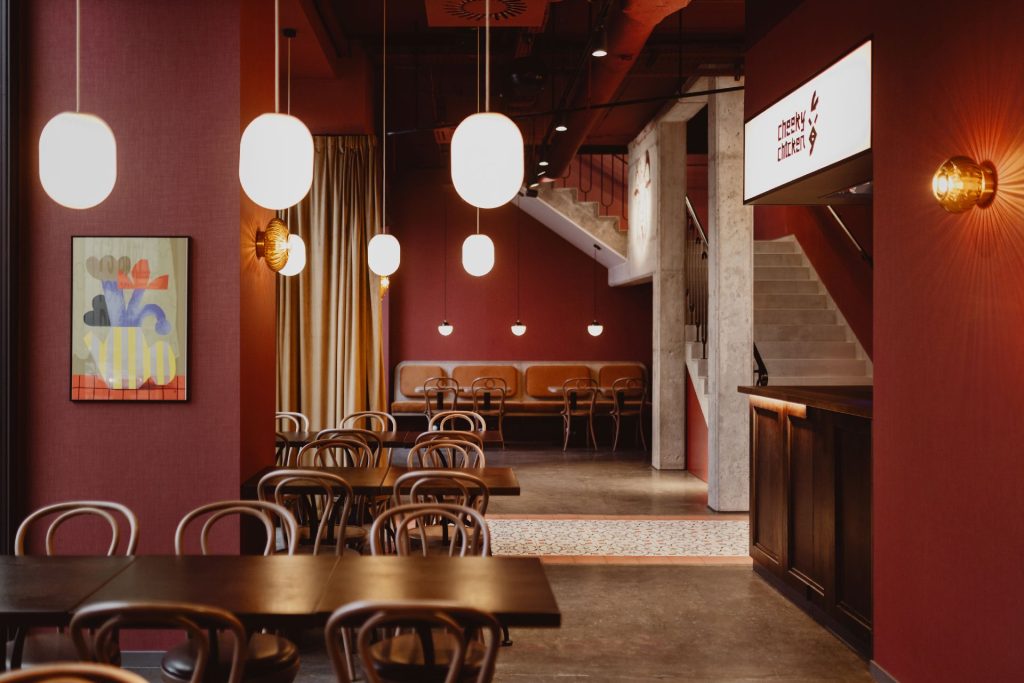
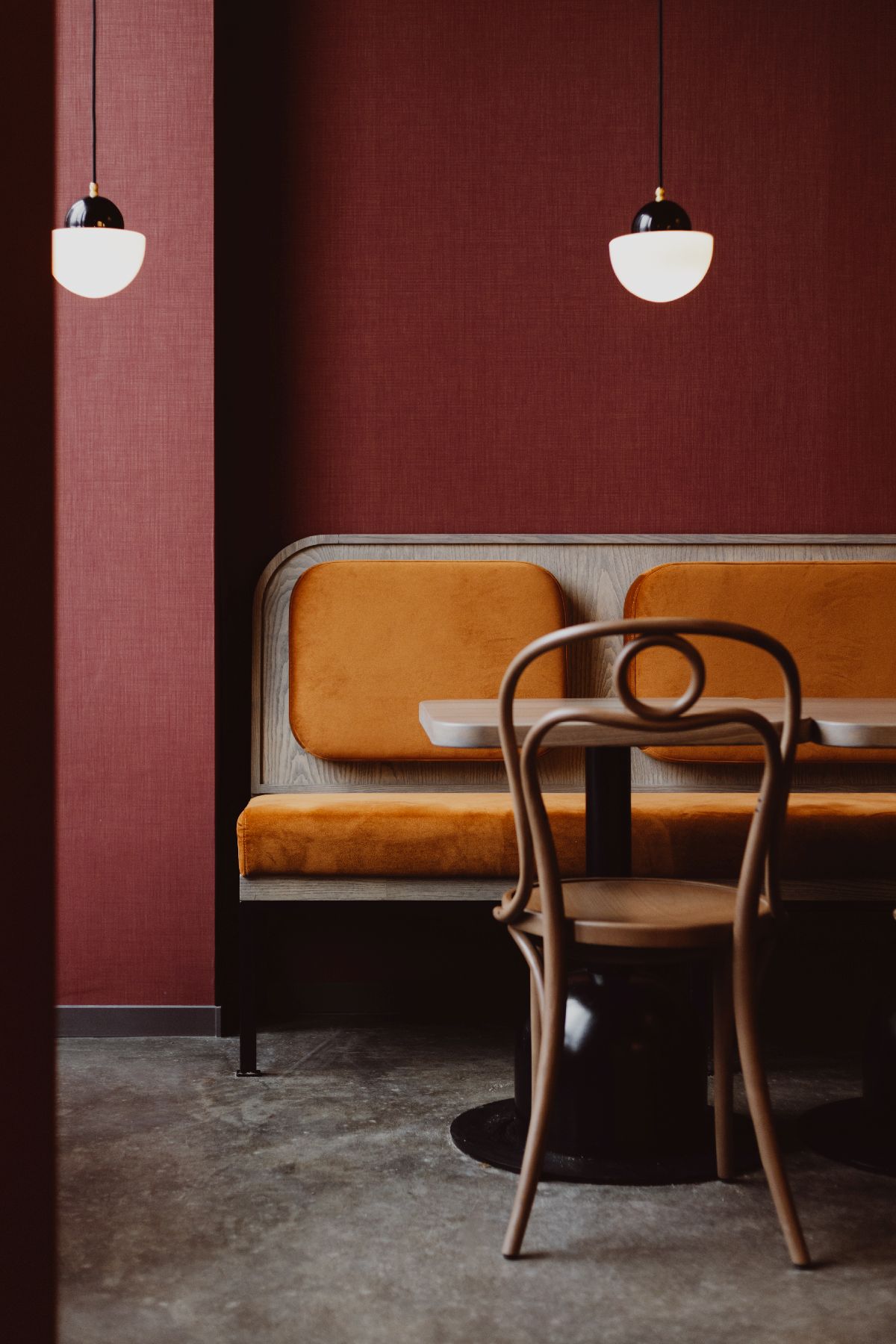
This subdued rhythm gradually gives way to more intense sensations. In the Eastern zone, rich colours appear – burgundy and orange – along with dark wood and colourful lanterns made from Indian fabrics. The space gains depth and warmth, referencing the strong aromas and flavours of the cuisines present here, and closing the interior narrative with a contrast between minimalism and sensual intensity.
“It was complicated to tie all these styles together,” says Terlecka . “However, we chose a specific palette of colours, materials, and textures that we consistently used regardless of style. Burgundy, green, and beige form a coherent colour set applied in different ways throughout the entire tenement.”
The final stop
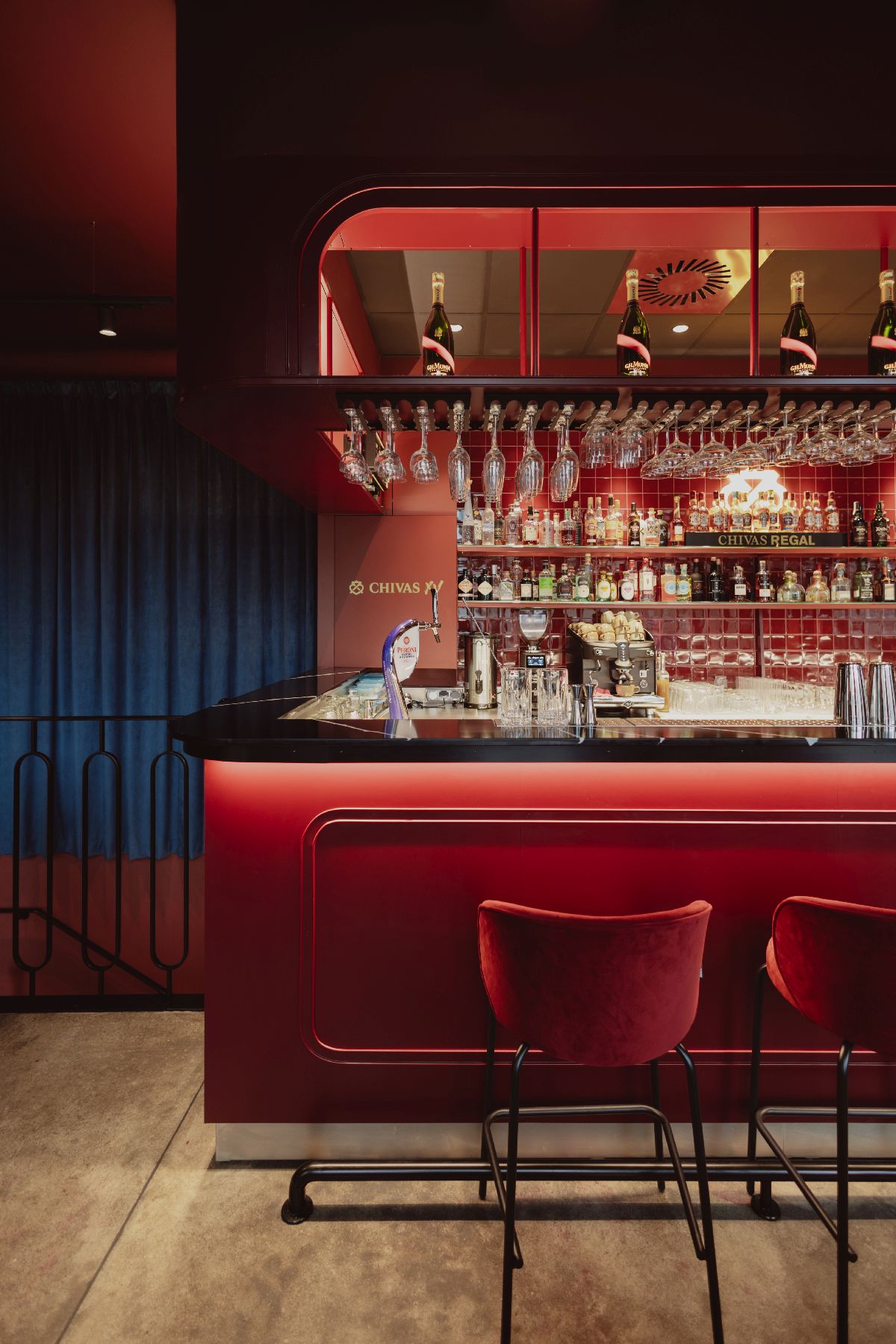
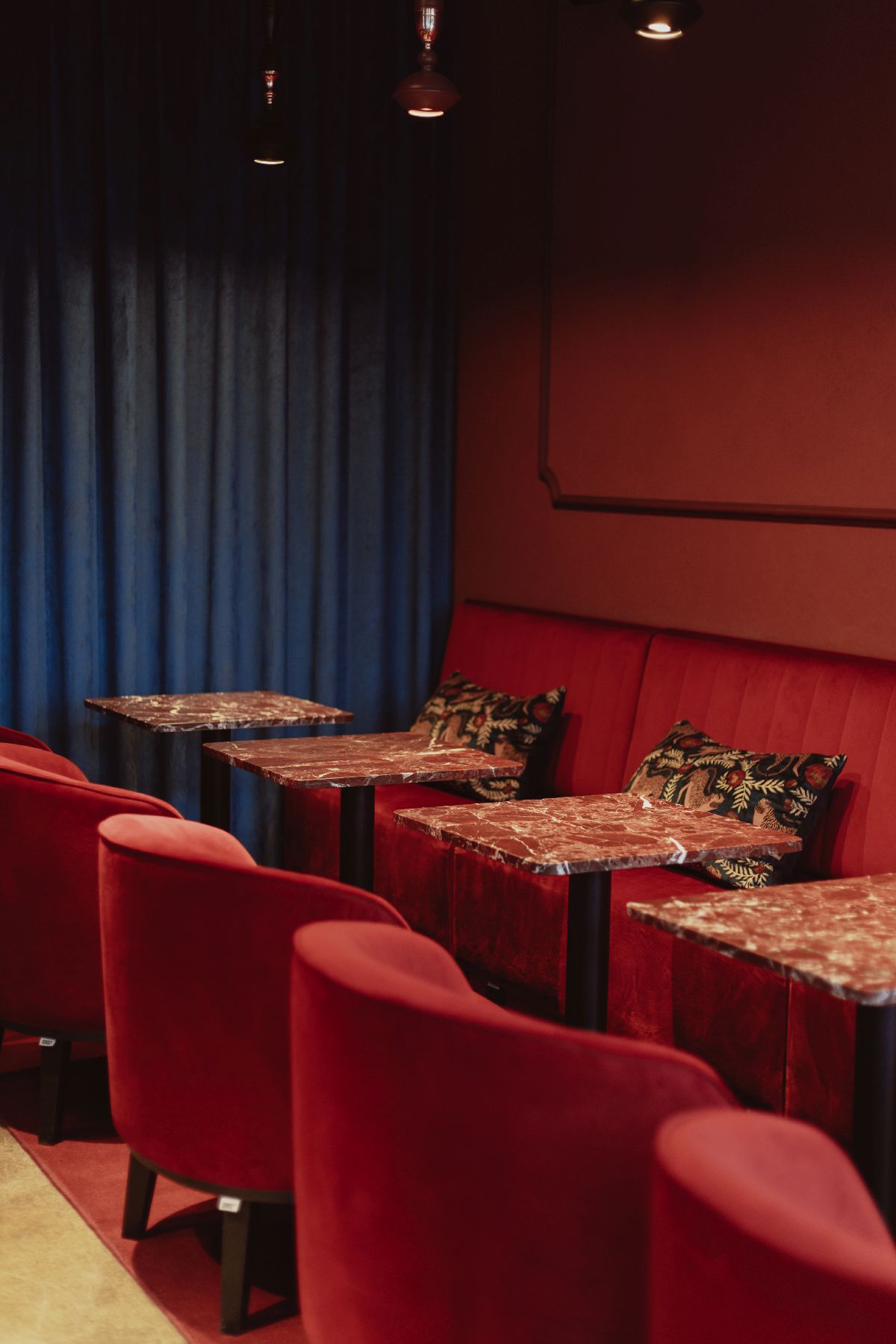
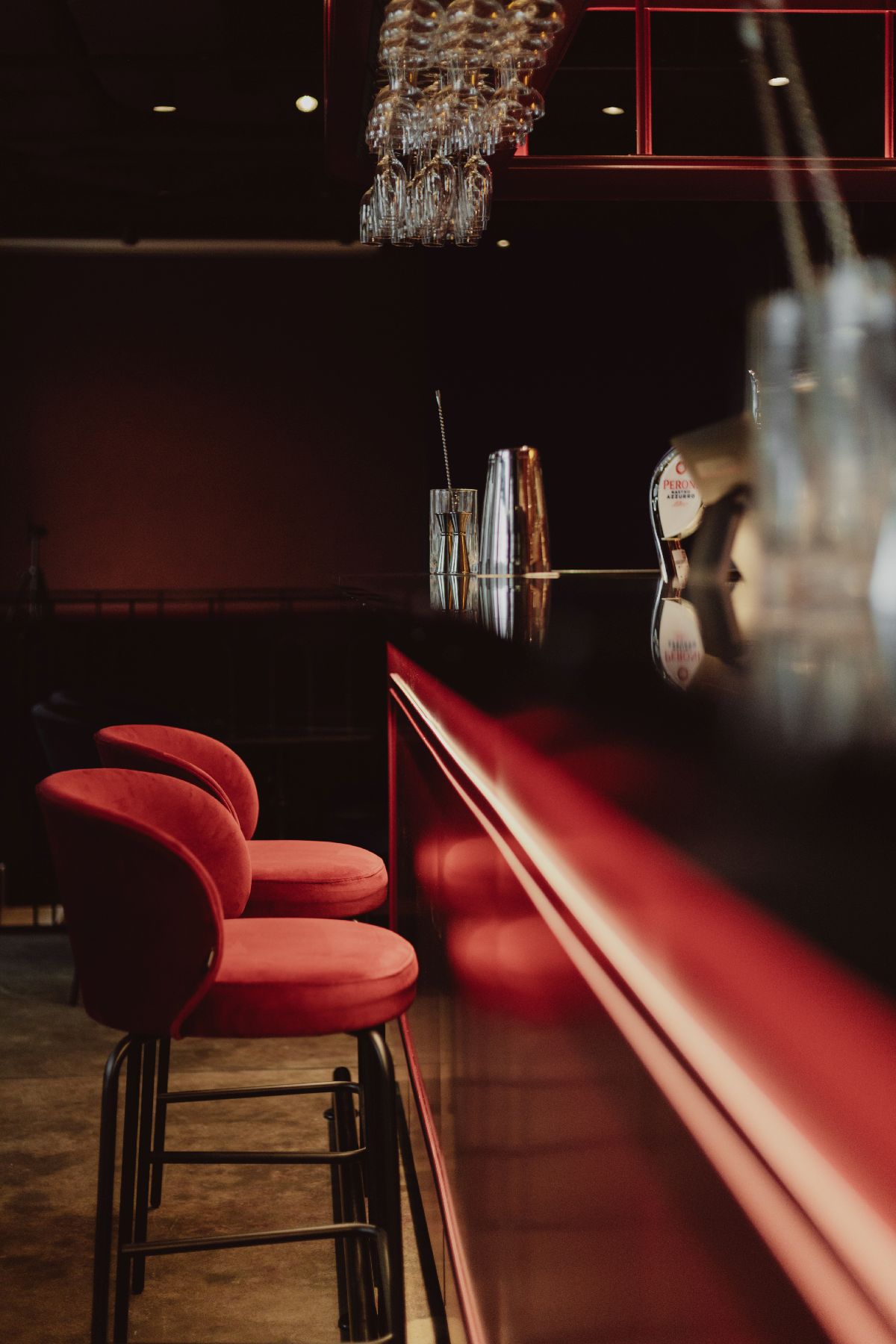
This journey of flavours ends upstairs – in a more intimate space, open to the city thanks to historic shopfront windows. It is a place of everyday rituals: coffee during the day and longer evening conversations over cocktails. Soft, comfortable sofas and a restrained palette of burgundy and navy blue create a mood of calm, while warm, atmospheric light subtly plays across fabrics and deliberately imperfect plasters executed using the wabi-sabi technique.
“The soul of this space is a subtly sculpted bar, finished in burgundy-toned steel, which gives the interior a contemporary accent and discreetly reflects light. Soft textiles coexist here with Art Nouveau stucco and noble materials, and the whole is complemented by artwork by Bart Sucharski,” comments Maja Skołysz of M19 Architekci.
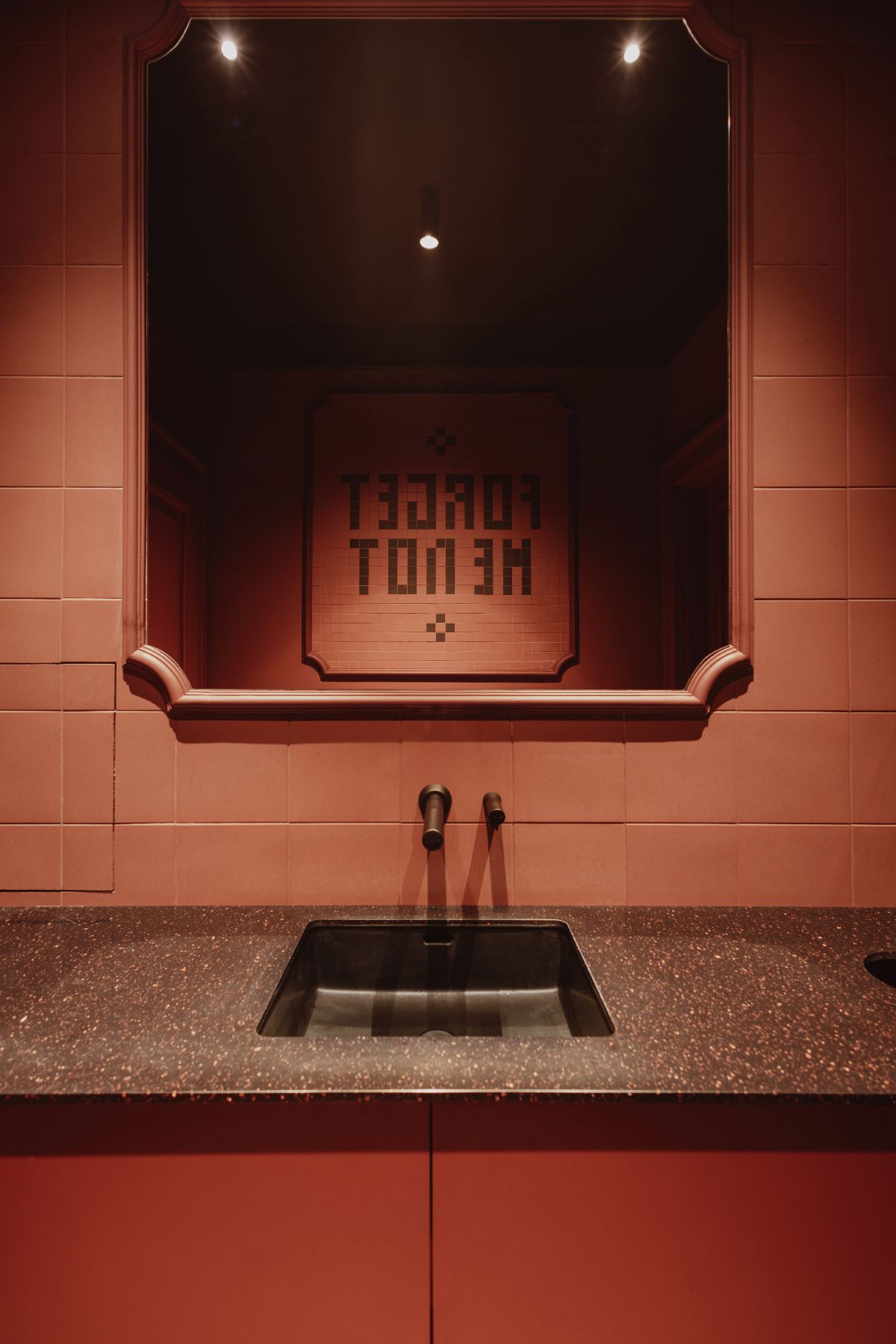
“Even the restroom becomes a separate, intimate episode in this story,” says Skołysz. “Consistent colour schemes, bold details, and a theatrical play of light introduce an element of surprise, turning this small space into a fully-fledged, memorable part of the interior.”