On Gatterburggasse, a quiet street in Vienna, sits a nineteenth-century apartment building with the understated grandeur typical of the city’s historic architecture. Yet following renovation, many of the apartments inside have become largely interchangeable: white walls, neutral finishes and little to distinguish one interior from the next. The brief for one particular apartment, designed by Alta Idea Design Studio, was not simply to furnish the space, but to restore a sense of identity.
Every interior begins with the person who lives there; before furniture, colour or decoration, there are habits, memories, rituals and the private details that shape daily life. This apartment became a reflection of its owner: a home designed less as a composition and more as a portrait.
The client, a dermatologist based in Vienna, works in a profession defined by precision, discretion and close attention to detail. At home, she wanted a different atmosphere – calm, restorative and quietly expressive, with space for beauty, culture and personal meaning.
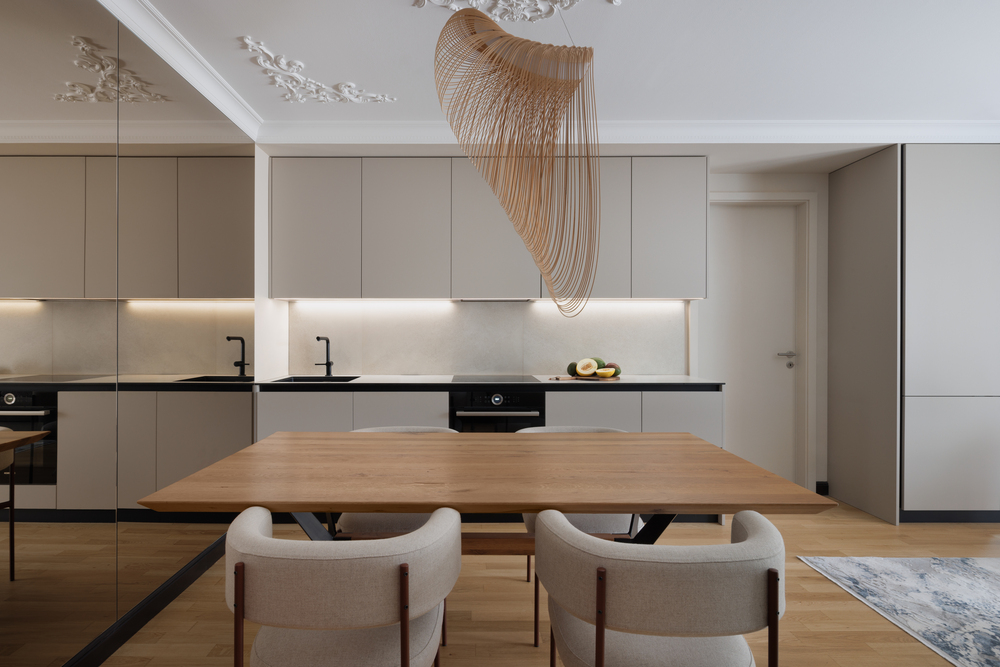
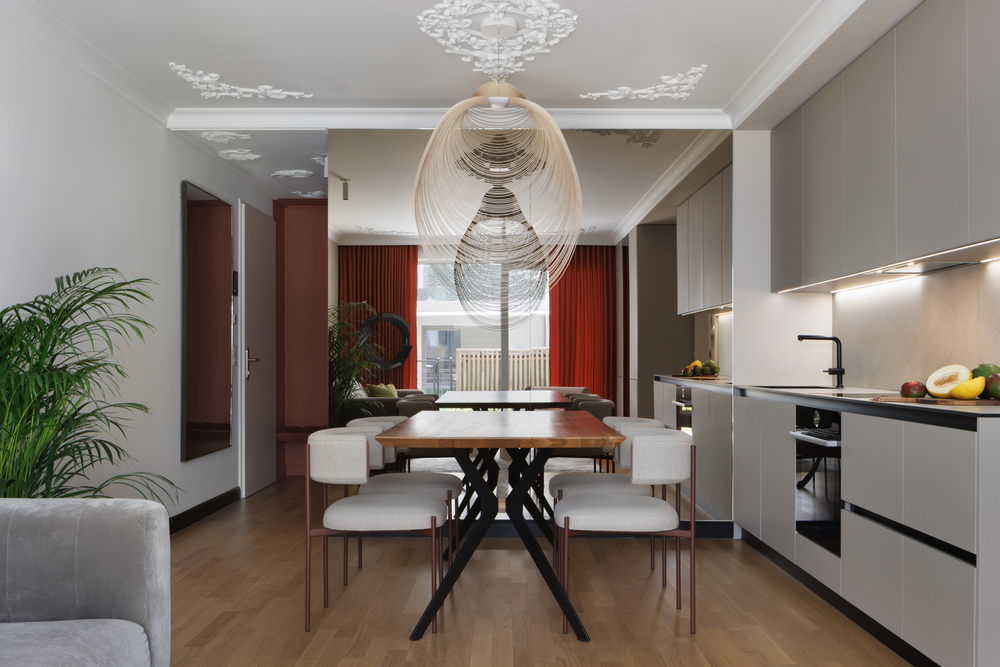
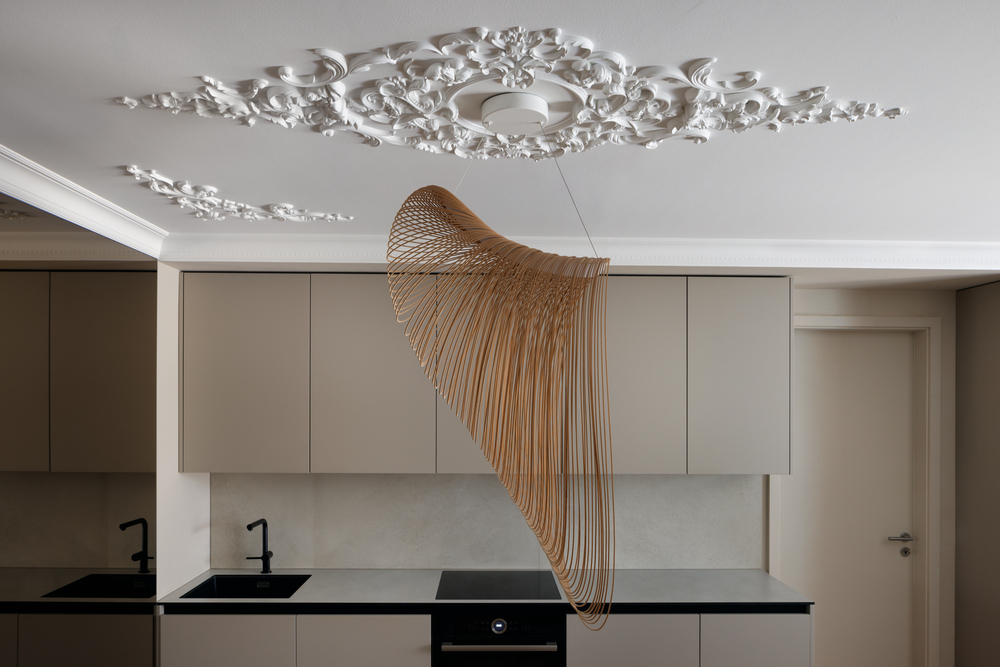
One of the earliest decisions was to give the apartment a stronger architectural presence. Ceiling mouldings and cornices were introduced by the design team; not original to the flat, yet entirely in keeping with the building’s character. They restore a sense of proportion and rhythm, evoking old Vienna without theatrical decorations.
Colour plays a subtle but important role. In the living room and bedroom, walls are painted in layered shades by Farrow & Ball, selected for the way they shift with changing light. In morning light, they can appear warmer and softer, by evening, cooler undertones begin to emerge. This quiet changeability gives the rooms depth and prevents the neutral palette from ever feeling flat.
Throughout the apartment, objects are treated almost like accessories within a carefully assembled wardrobe: sculptural, tactile and expressive. The Noom armchair in the living area is one such piece – a work of Ukrainian collectible design whose playful softness is balanced by a disciplined Bauhaus geometry of circles, cylinders and repeated forms. It introduces wit, comfort and character while creating a quiet dialogue between Viennese elegance and contemporary Ukrainian design.
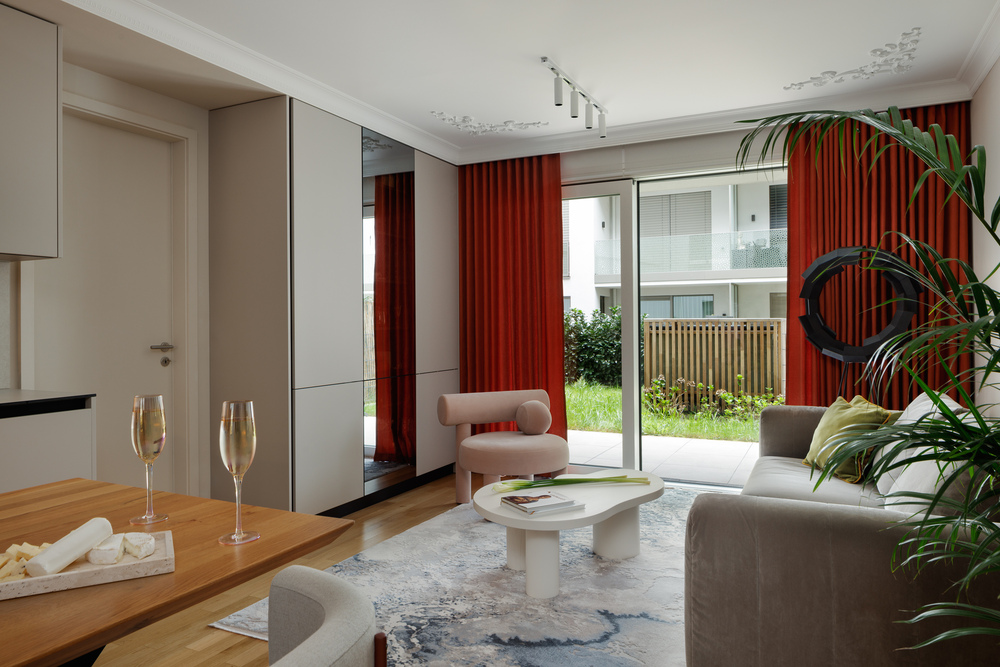
Nearby, a sculpture by Austrian artist Roman Pferrer adds another personal layer. Its graphic, architectural presence sharpens the room’s artistic identity and anchors the apartment within its local cultural context. Together with the Noom chair, it creates a conversation among local art, Ukrainian design, and the client’s appreciation for art.
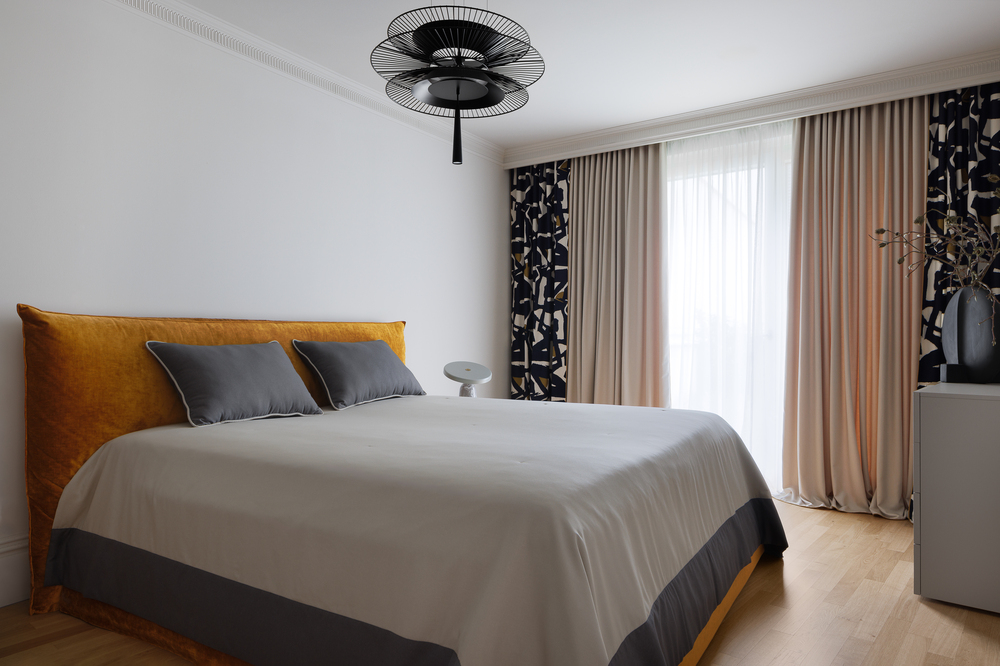
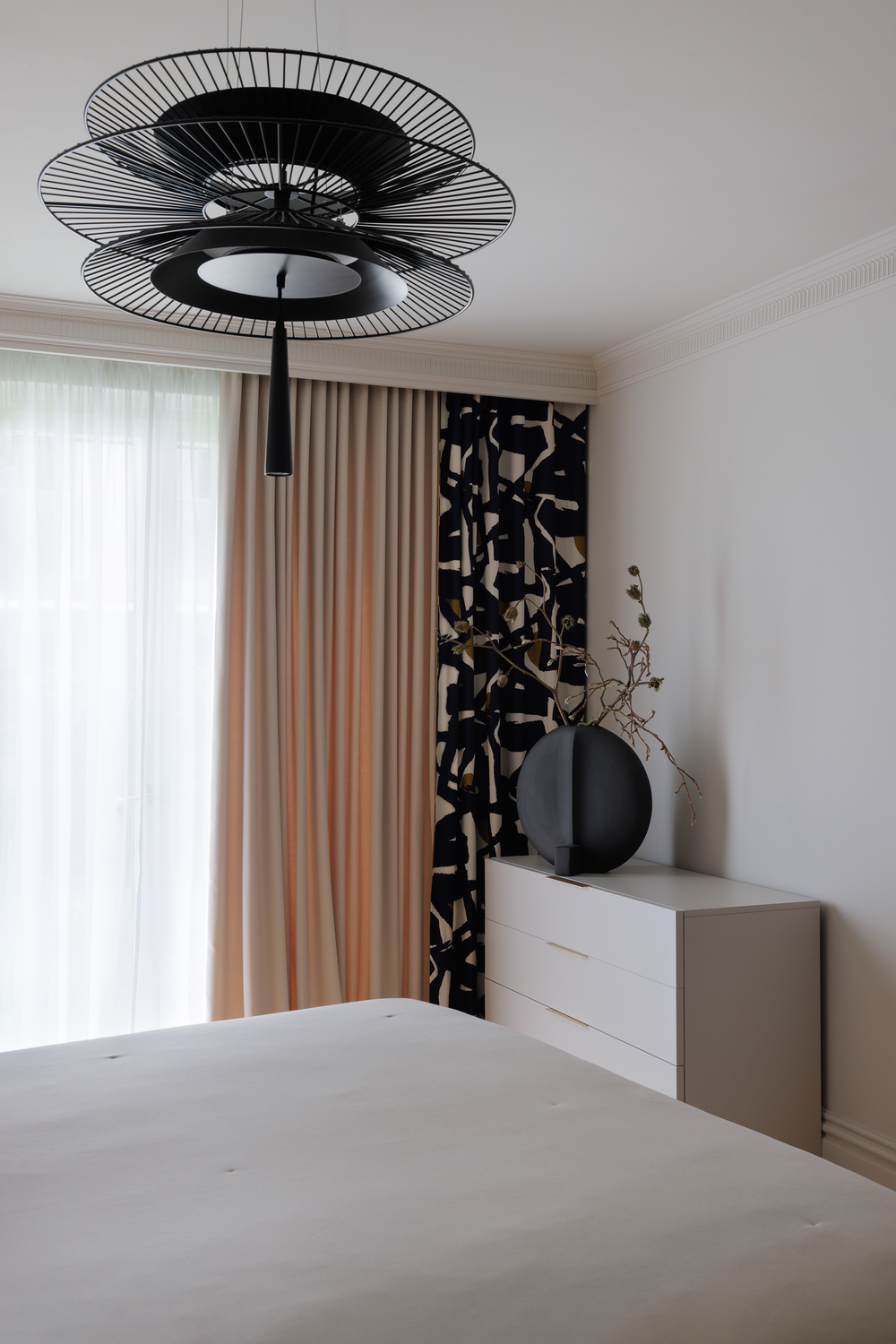
Lighting is approached with the same precision. Pendants and floor lamps are used almost as jewellery, adding reflection, delicacy and being able to catch the light in a way that feels almost decorative in the fashion sense. Above the dining table, a sculptural pendant forms a focal point beneath the new ceiling ornamentation. In the bedroom, a Forestier pendant introduces a softer, more intimate atmosphere, echoing the client’s love for details.
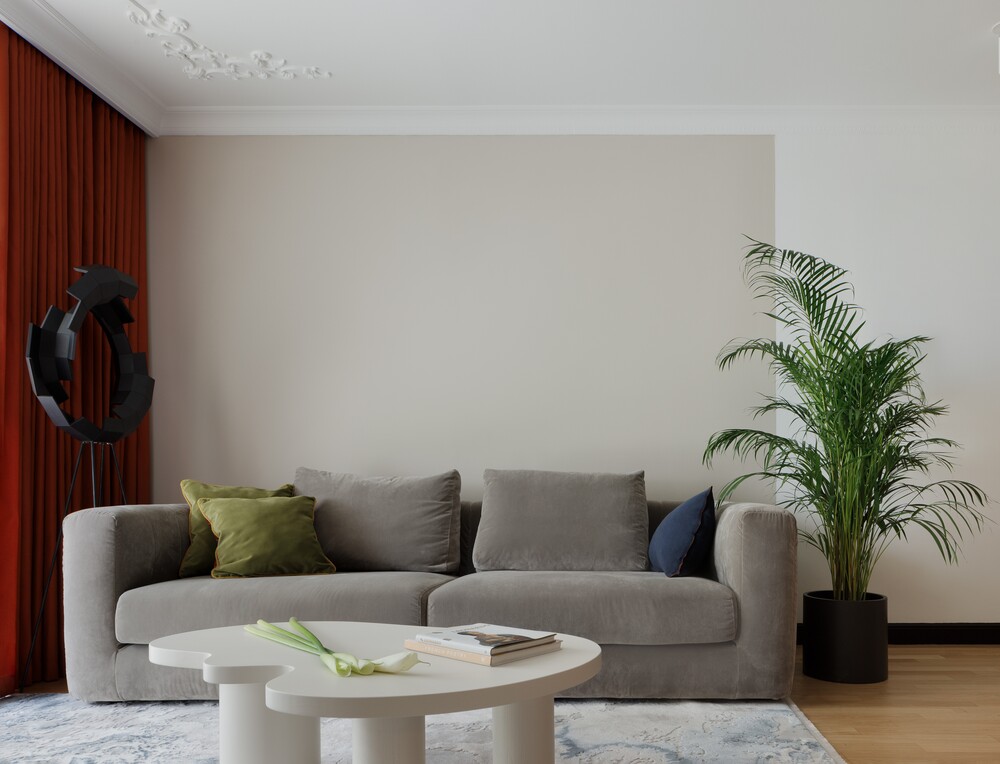
The main living area combines kitchen, dining and lounge within one open plan, while allowing each zone its own mood. The kitchen remains calm and architectural, defined by clean-lined cabinetry and a mirrored bar insert.
In the dining space, a full-height bronze-tinted mirror transforms the room’s proportions. It reflects light from the garden, amplifies the terracotta tones nearby and visually extends the apartment. More than a decorative gesture, it lends the interior depth and warmth, with the garden drawn into the rooms through reflection.
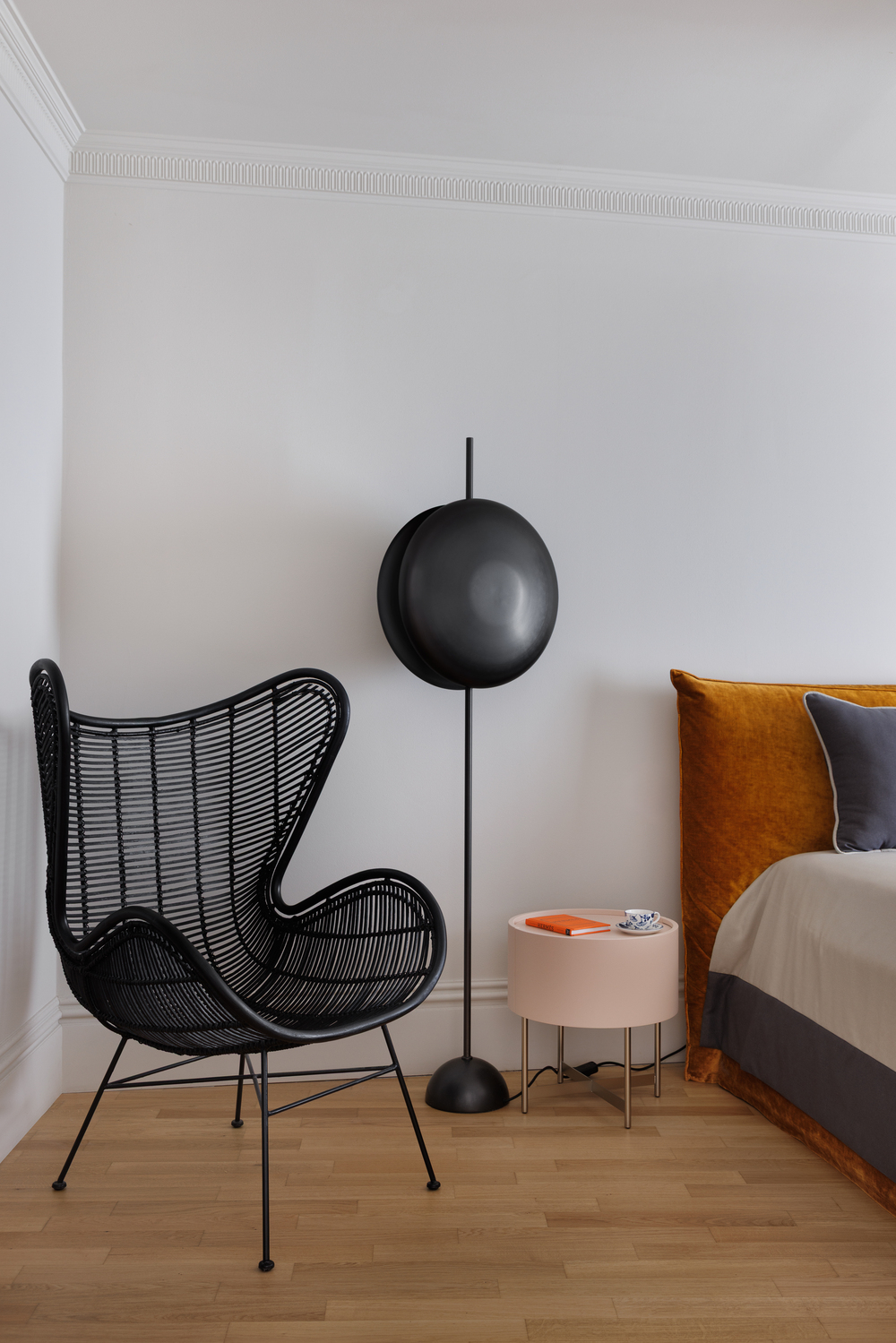
The living area carries some of the project’s most personal references. The client’s love of the ocean appears not as motif but memory: a rug with a washed, fluid pattern subtly recalls the movement of waves. Positioned beside the palm and garden doors, it suggests travel, ease and moments known only to its owner.
In the bedroom, the atmosphere becomes quieter and more enveloping. Furniture by Pianca brings refined Italian clarity, while expressive curtains add softness and movement and individuality. It is a room intended for rest, reading and withdrawing from the intensity of the day.
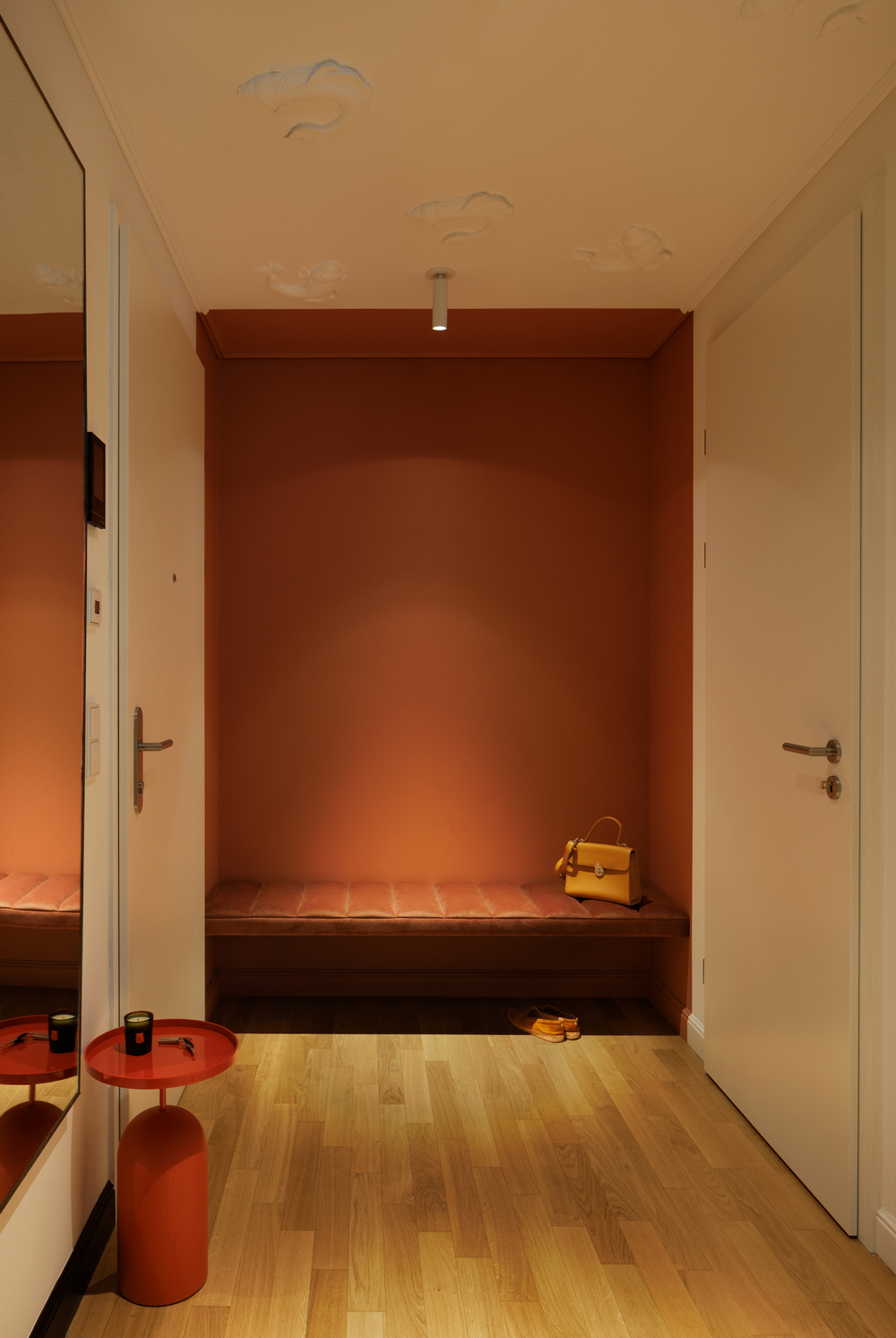
The dressing room offers perhaps the most intimate expression of the client’s Viennese life. Each year she attends the city’s ball season, and the wardrobe was designed to accommodate the dresses associated with that tradition. Unlike the softer tones elsewhere, this room is finished in deeper shades, allowing illuminated clothes, fabrics and accessories to take centre stage. Jewellery is concealed within a leather-lined drawer, creating a discreet and tactile ritual of use.
The apartment also opens onto a terrace and private garden – a rare luxury in the city. This outdoor space became essential to the client’s daily rhythm: a place to step outside, sit quietly among greenery and decompress after demanding days.
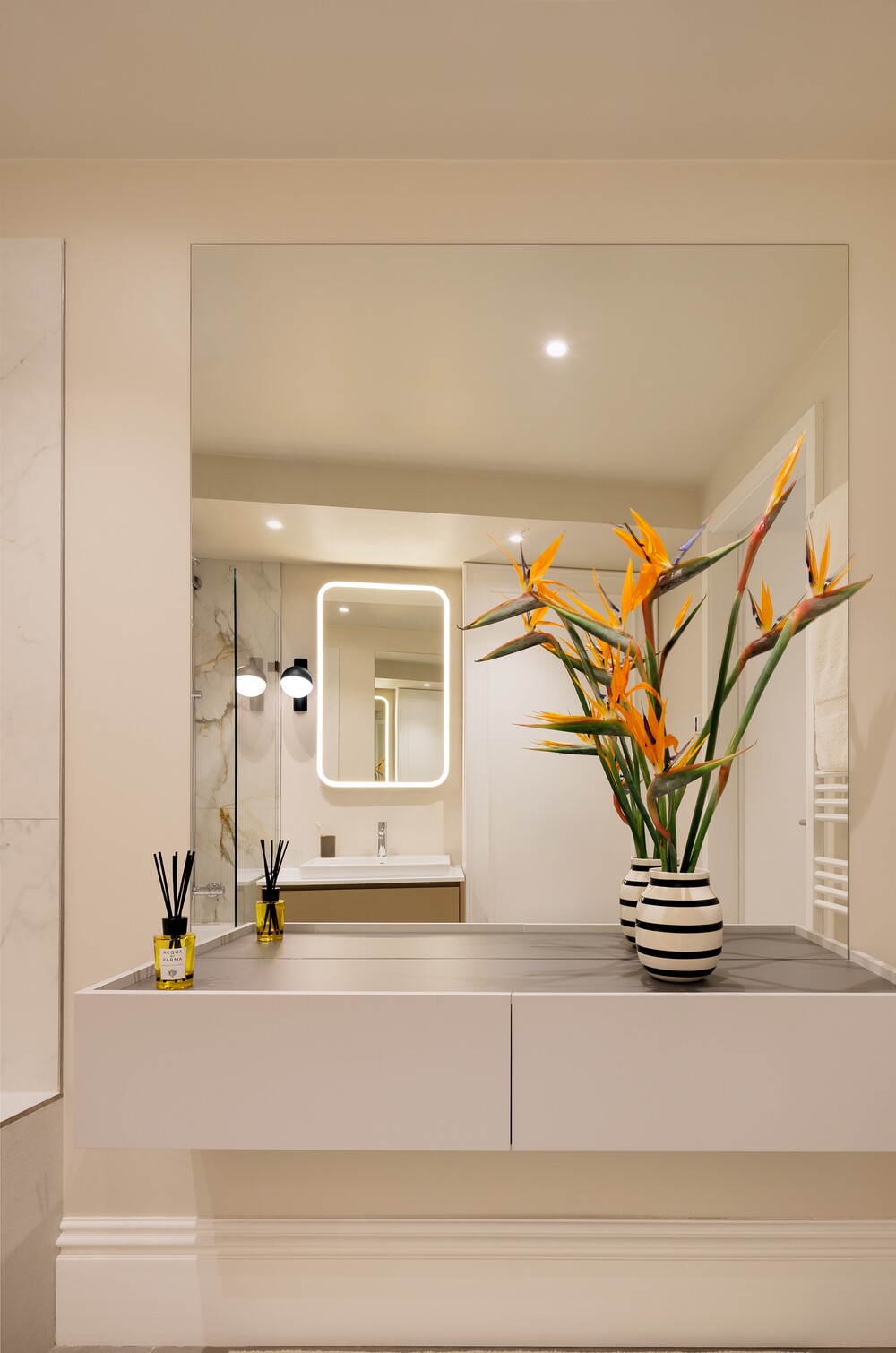
What makes the project compelling is not simply the meeting of historic architecture and contemporary design, nor the presence of carefully chosen art and furniture. Its strength lies in the precision with which it has been shaped around one person. Architectural details restore memory to a once-neutral space, while art, lighting and textiles reveal the client’s character.
In a building where many apartments had become anonymous after renovation, this home now feels unmistakably individual: It has Viennese elegance, Ukrainian design, Austrian art, Italian furniture, fashion-like detailing and private memories woven into one interior. Most importantly, it has something that cannot be bought as a trend: a sense that every choice belongs to the person who lives there, and will continue to bring her joy for years to come.